Built around two sounds
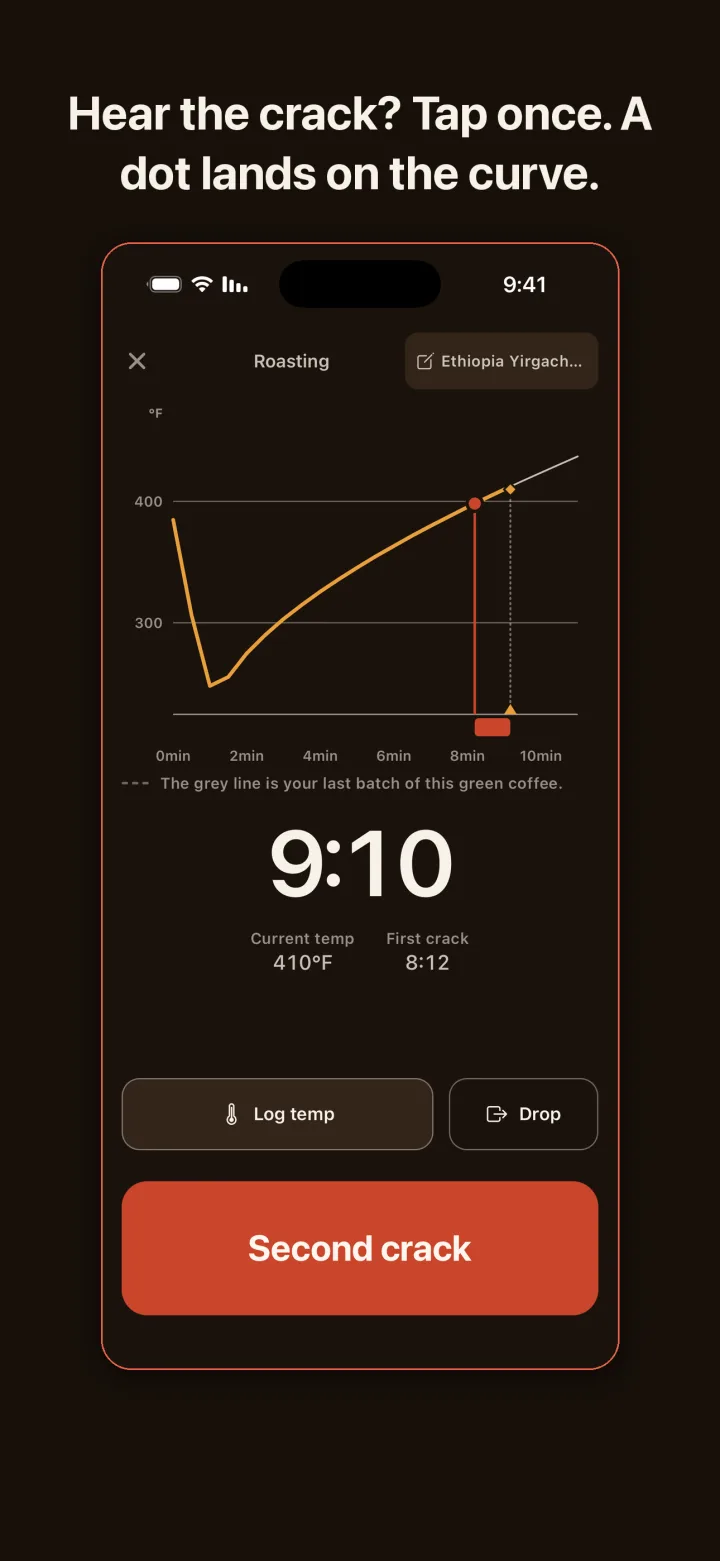
Every home roaster waits for the same two moments: the first sharp pops of first crack, and the quieter crackle of second crack a few minutes later. Everything about the roast is timed against them, which is why people scribble crack times on paper or shout them at a spreadsheet after the fact. CrackLog moves that one act, noting the second a crack starts, onto a single large button that you can hit without looking away from the beans.
Temperature entry is manual on purpose. You read the number off your roaster and type it whenever you feel like it, every thirty seconds or every two minutes. The curve interpolates between your points and the crack markers sit exactly where you tapped them, so the graph reflects what you actually did rather than what a probe guessed.
A roast, start to finish
Hit Charge and the timer starts at 0:00. The screen stays awake for the whole roast so you never have to unlock the phone with a hot glove. Punch in temperatures as you go; the curve redraws on every entry. Tap the crack button at first crack, and again at second if you go that far. Drop the beans and the timer stops.
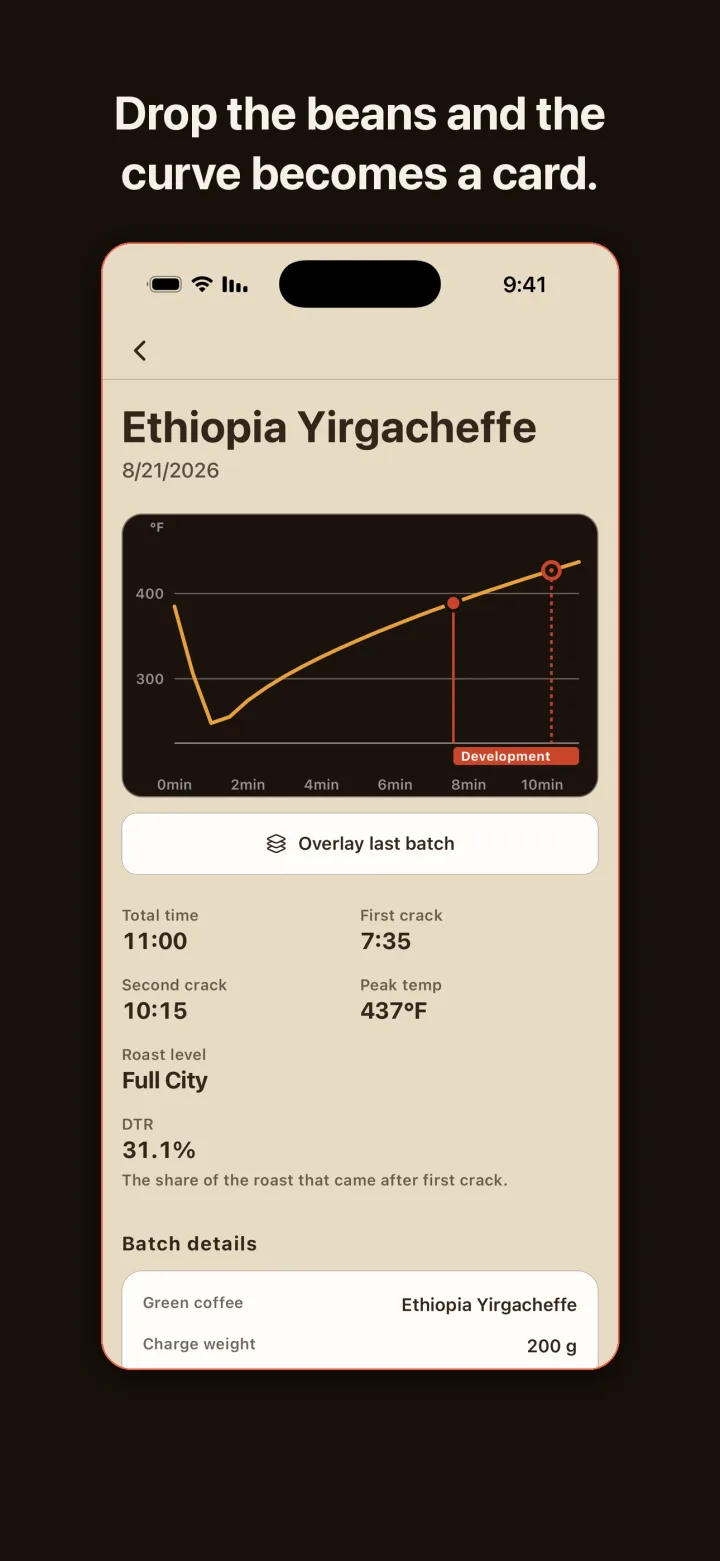
The finished batch asks for the things you already know: which bean, where it came from, the charge and drop weight, and the roast level you would call it, from Light through Italian. Yield and development time ratio are computed for you and shown as plain numbers. CrackLog never grades the roast or tells you what an ideal DTR is; whether the batch is good is decided in the cup.
Cards on a shelf
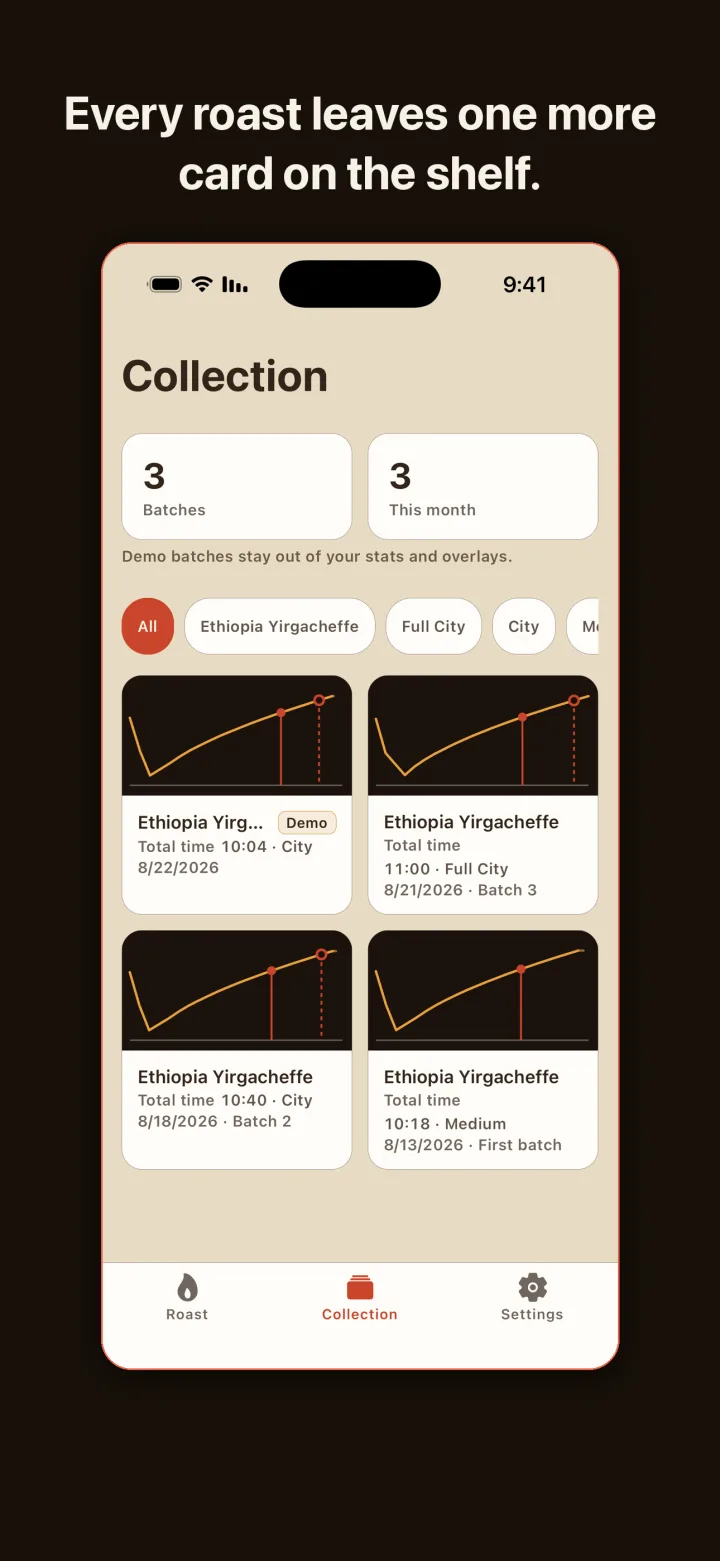
Batches stack into a collection you can browse by bean or by roast level. Each card is a small picture of that roast, with the curve thumbnail and both crack markers visible at a glance, so scanning last month's Yirgacheffe roasts is a matter of scrolling rather than opening spreadsheets. When you roast the same bean again you can overlay any earlier card under the live curve.
There are no streaks, missions, or reminders. Roasting once or twice a week is the rhythm this log expects, and it will not nag you to roast on a Tuesday because you did last Tuesday.
Try it before you buy green beans
The built-in demo replays a ten-minute roast in thirty seconds. You get to tap a first crack and watch the dot land before a single bean is roasted. Demo batches are badged and kept out of your statistics, so they never pollute the real collection.
What it deliberately leaves out
CrackLog is a home roasting log, not a lab rig. There is no Bluetooth, no probe pairing, and no microphone listening for cracks. Tools like Artisan exist for people with thermocouples and a laptop next to the drum; this app is for the person holding a popcorn popper over the sink. It asks for zero permissions and makes zero network requests. Your log can be exported to one file for backup, imported back on a new phone, and wiped from Settings in a single move.
Frequently asked questions
Does it need a temperature probe or Bluetooth?
No. You type the temperature you read off your roaster, and you tap the crack button when you hear the crack. There is no hardware pairing at all.
What if I tap first crack too early?
Undo it immediately with the button that appears after each tap, or open the batch after dropping and nudge the crack time by a few seconds.
Is my roasting log uploaded anywhere?
Never. CrackLog makes no network requests and has no account system. Backup is a single export file you keep wherever you like.
Does it show Celsius or Fahrenheit?
Either. Pick the unit in Settings and the curve axis, entries, and cards all follow it.
Is there anything to buy?
No. The app is free with no ads and no in-app purchases.