The mirror after a shower, with company
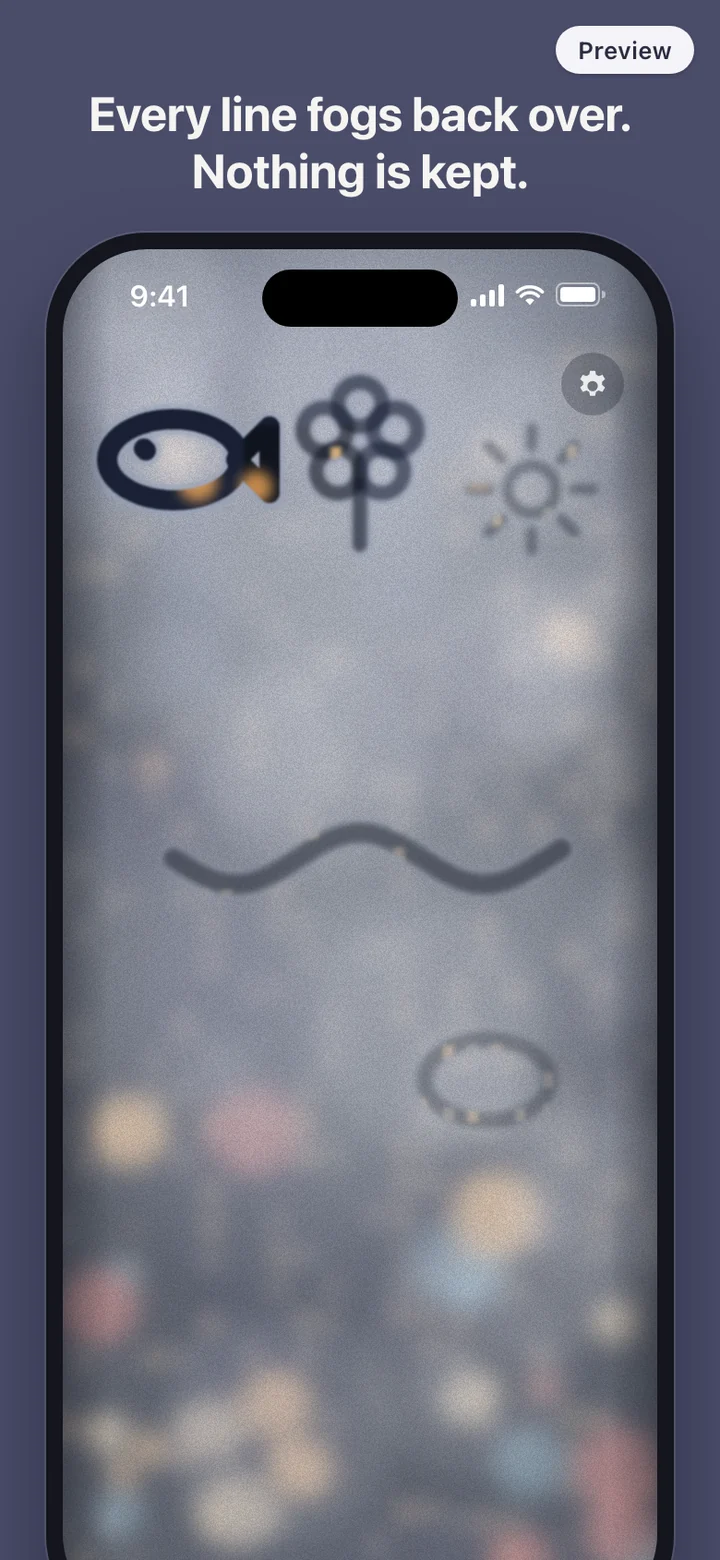
Most people have drawn on fogged glass: a face on the bathroom mirror, a name on a bus window, a smiley on the car windscreen while someone else drives. It takes no skill and it means nothing, which is most of the charm. The drawing is also gone within minutes, and nobody else ever sees it.
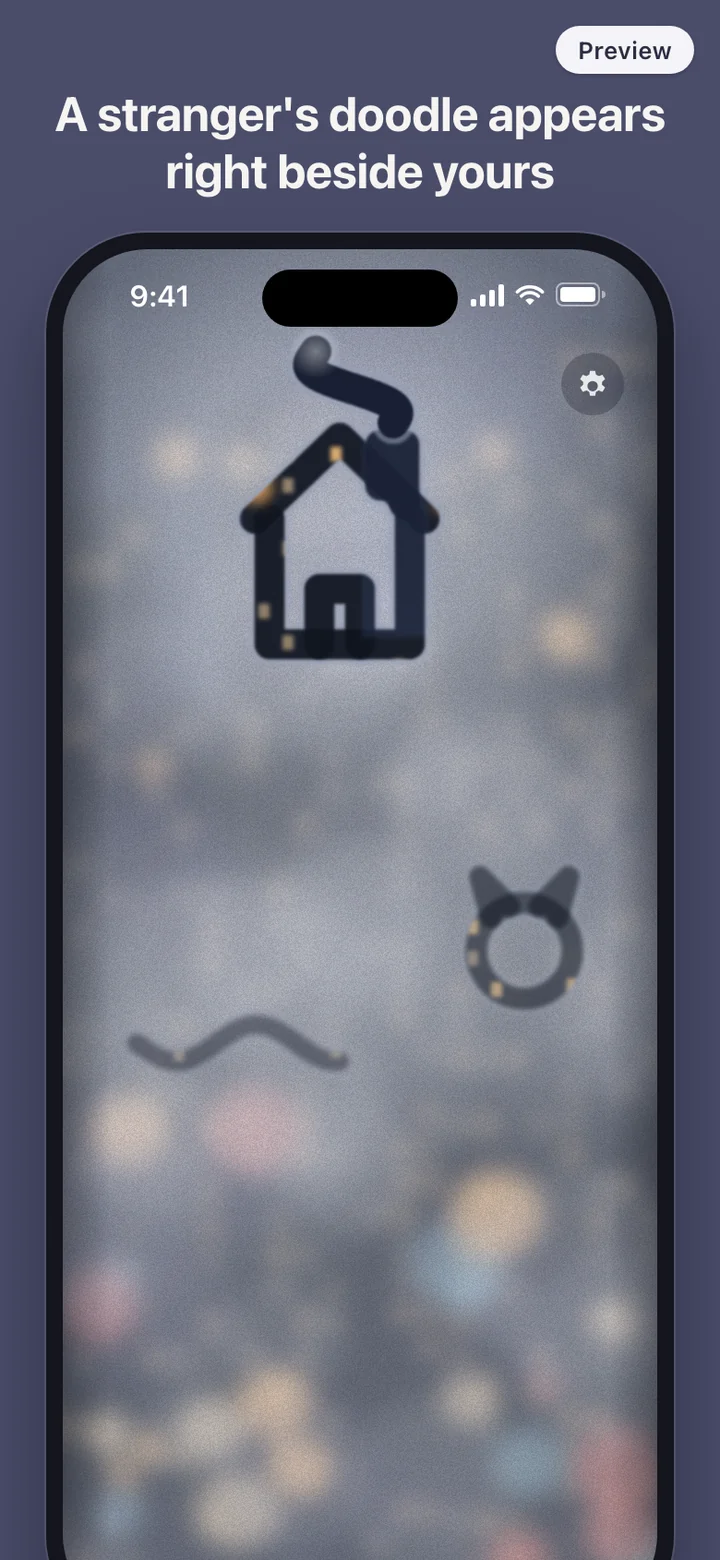
Fogglass keeps that small, pointless pleasure and adds one thing: other people. The window on your screen is shared with a handful of strangers who happen to be there at the same time. You never see their faces or profiles, only what their fingers leave in the fog, and only until the fog covers it again.
Opening the app puts you at the window
There is no welcome tour and no sign-in screen. The first thing you see is the window itself, lightly fogged, with one line of hint text telling you to press and hold. Behind the scenes the app gives itself an anonymous ID and you get a nickname it makes up for you, which only appears next to the short lines of text people post and in reports.
You do not pick a room. The app seats you at a window where people have been drawing recently, so there is a better chance someone is around, and starts a fresh one when the busy windows are full. Windows have no names or numbers. As far as you can tell, it is just a window.
Besides drawing, you can let one short line of text, up to 40 characters, drift onto the glass. It shows up like breath, fades after about a minute, and the next one has to wait a minute too. It is meant for a passing thought, not a conversation.
How the fog behaves
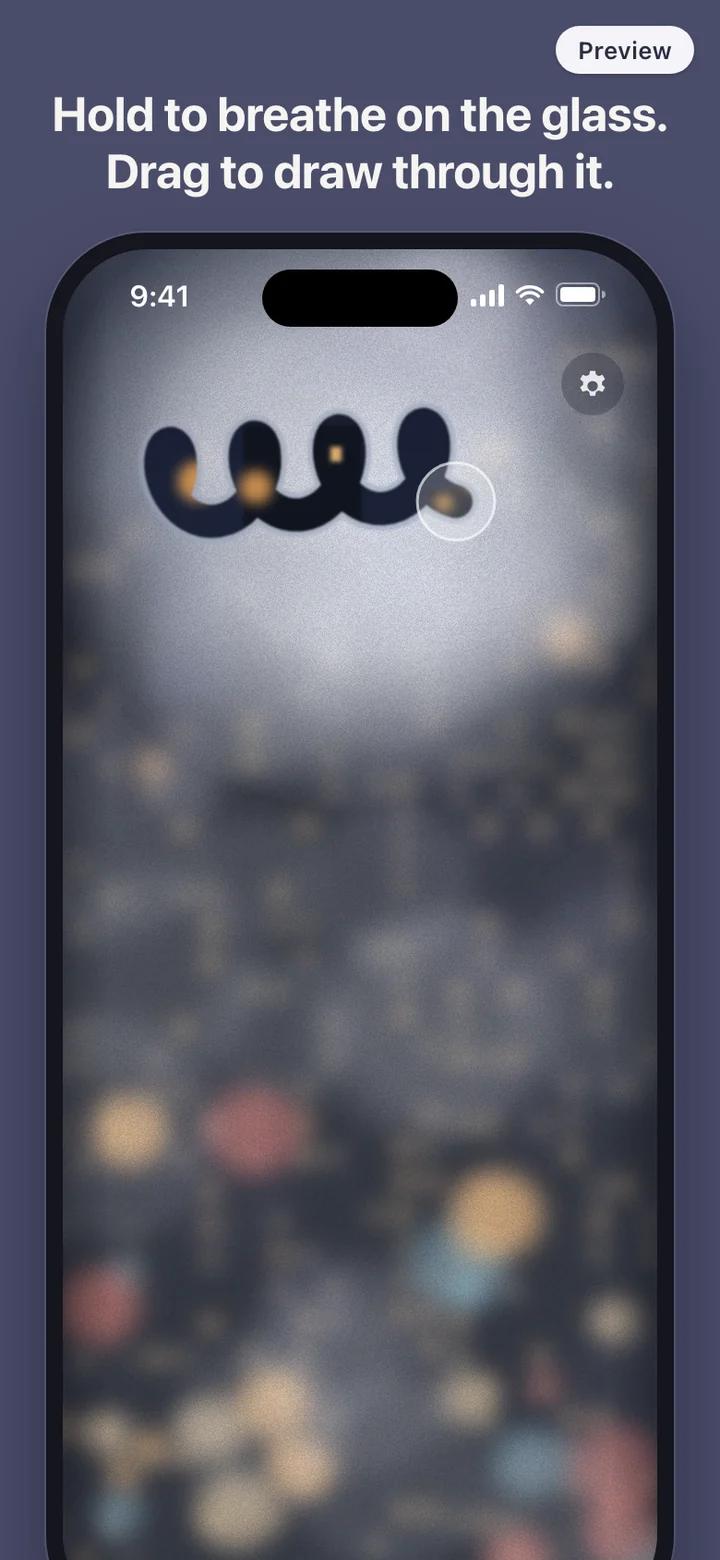
The glass is never completely clear. A faint haze sits over the whole pane, and breathing on it is local: the fog gathers around the spot you hold and thins out toward the edges. Breathe twice in the same place and it turns thick and milky. That build-up is what makes the glass feel like glass instead of a white rectangle.
A doodle is not paint. Your finger removes fog, so the line is wherever the haze has been wiped away, with a soft edge rather than a sharp one, and the view behind the window shows through it. There is one kind of line, about the width of a fingertip, and no colors or brushes to choose from.
There is sound if you want it: a soft breath when you hold the glass, and an ambient loop from outside the window that is on by default and can be switched off. The silent switch is respected, and nothing plays once you leave the app.
Strangers on the glass, and what happens when one is rude
An open window that anyone can draw on needs more than good intentions, so Fogglass has three layers. The first is the fog itself. Every doodle and every line of text disappears on its own, so nothing offensive can sit on the glass for long.
The second is reporting. Long-press any doodle or line of text to report it as inappropriate, spam, or something else. On your screen it is covered with fog right away, and everything else from that same anonymous person is hidden from you as well. When enough people report the same thing, it is hidden for everyone. You can review the people you have blocked in Settings.
The third is for repeat offenders. Someone whose drawings keep getting hidden is restricted for a while: they can still draw on their own screen, but nothing they make is shared with anyone else.
What it leaves out on purpose
There are no profiles, followers, likes, or comments, and no feed to scroll. There is no button to save, export, or share a doodle, because the fading is the point and also the main safety net. There are no rooms to browse and no chat threads, only one short line of text at a time.
Breathing on the glass is a press-and-hold gesture, so you never have to talk or blow into the phone. When you want to leave no trace, Settings has an option to erase your traces: it deletes your anonymous ID along with any doodles and text of yours that are still on the server, then starts you over with a new one.
Fogglass is a small pastime for a quiet minute. It is not a wellness, therapy, or medical app, and it makes no claims about stress, anxiety, or mood. If you are struggling or thinking about harming yourself, contact your local emergency number, or in the US call or text 988 to reach the 988 Suicide & Crisis Lifeline.