The set lives in a photo, the allergy lives in a binder
Most independent nail techs keep client records in three places at once. The set itself is in the camera roll, somewhere between last month's appointments and a few hundred saved nail-art references. The consultation form is a printed sheet in a binder or a folder under the desk. Everything else, like the client who wants her thumbs shorter or the one whose cuticles turned red after a gel overlay, sits in a notes app or in your memory.
A photo shows the color. It rarely shows that the ring fingers were coffin while the rest were almond, that the base was a hard gel rather than a builder, or that the thumbs were filed a size shorter because she types all day. And a paper form only helps if it happens to be in the room when the client mentions, three visits later, that her fingertips itched for a week.
Ten nails, each with its own mark
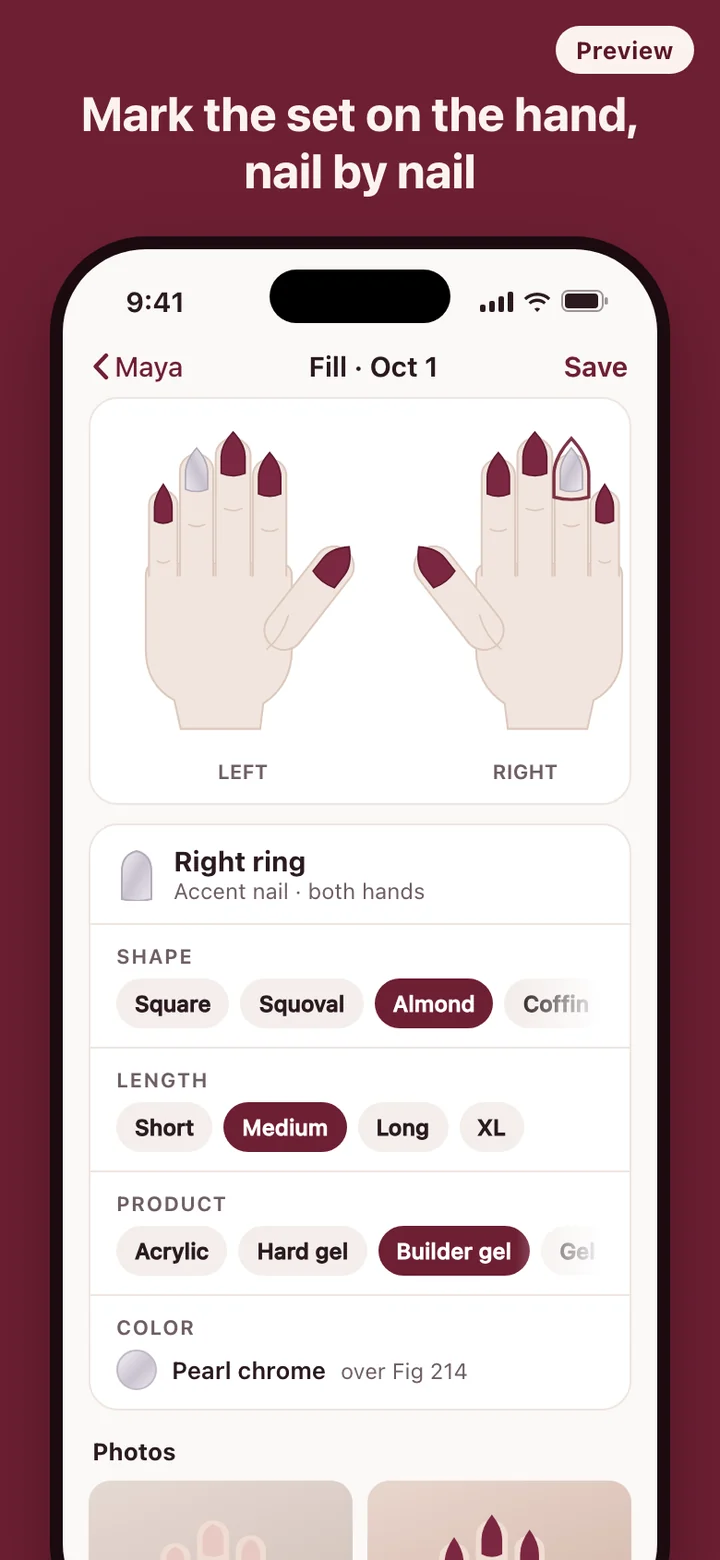
NailCarte records a service on a drawing of two hands. Every nail is marked on its own: the shape (square, squoval, round, oval, almond, coffin, or stiletto), the length from short to extra long, the product system underneath, such as acrylic, hard gel, builder gel, or gel polish, and the color on top. Marked nails fill in on the chart, so a set with one accent nail per hand looks like that instead of being buried in a sentence.
Before and after photos from the chair attach to the same service. The chart says what was done and the photos show how it came out. Together they are the record you want when a regular sits down, holds up a screenshot, and asks for the same as last time, only longer.
Consent before the first coat
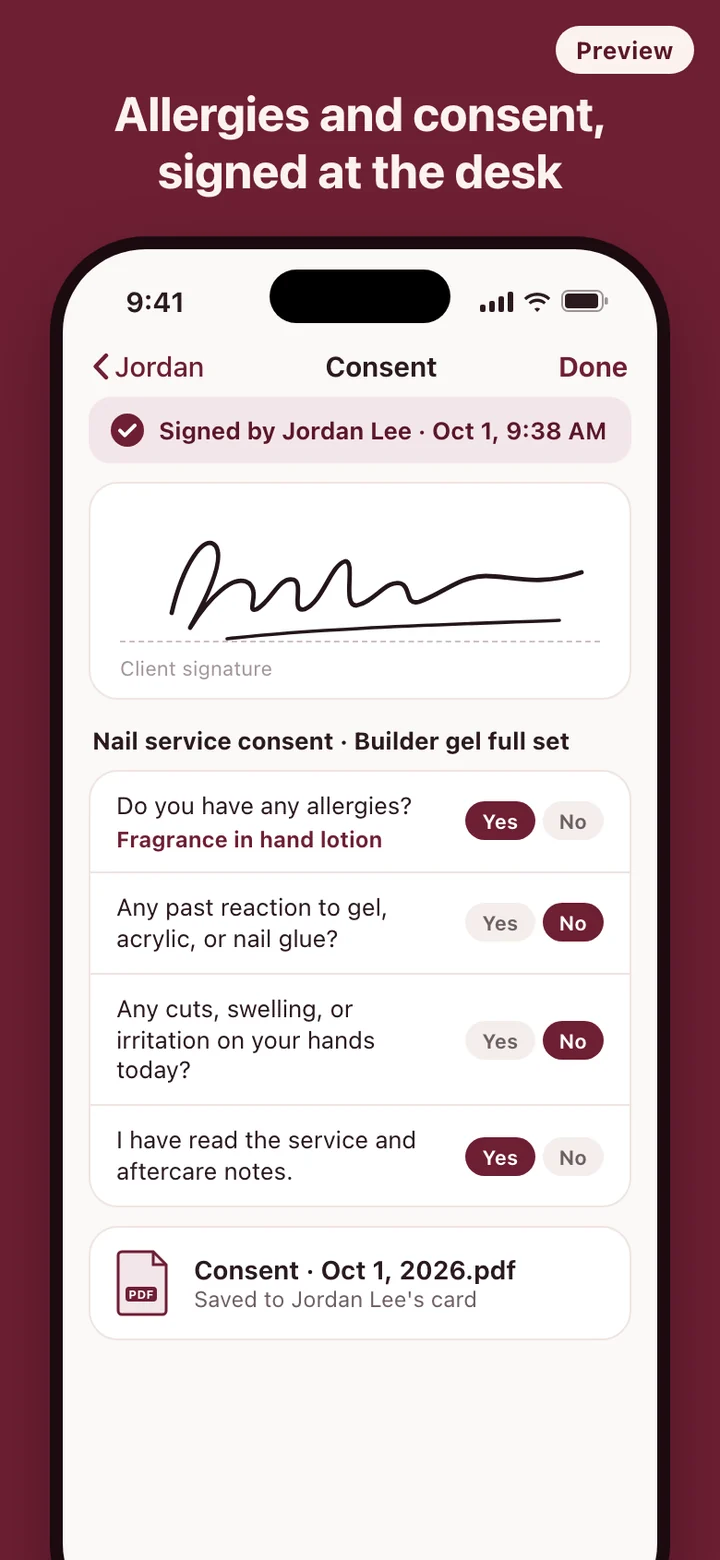
Acrylic and gel products contain chemicals that some people react to, which is why many techs ask about allergies before they start. In NailCarte the consent form opens on your phone at the desk. It asks about allergies and past reactions to nail products, the client reads it through, and signs on the screen with a finger.
The signed form is saved as a PDF on that client's card with the date it was signed. The card also has its own allergy field near the top, so a reaction someone mentioned in March is the first thing you see in June, not a detail you have to remember to look up.
A fill day, start to finish
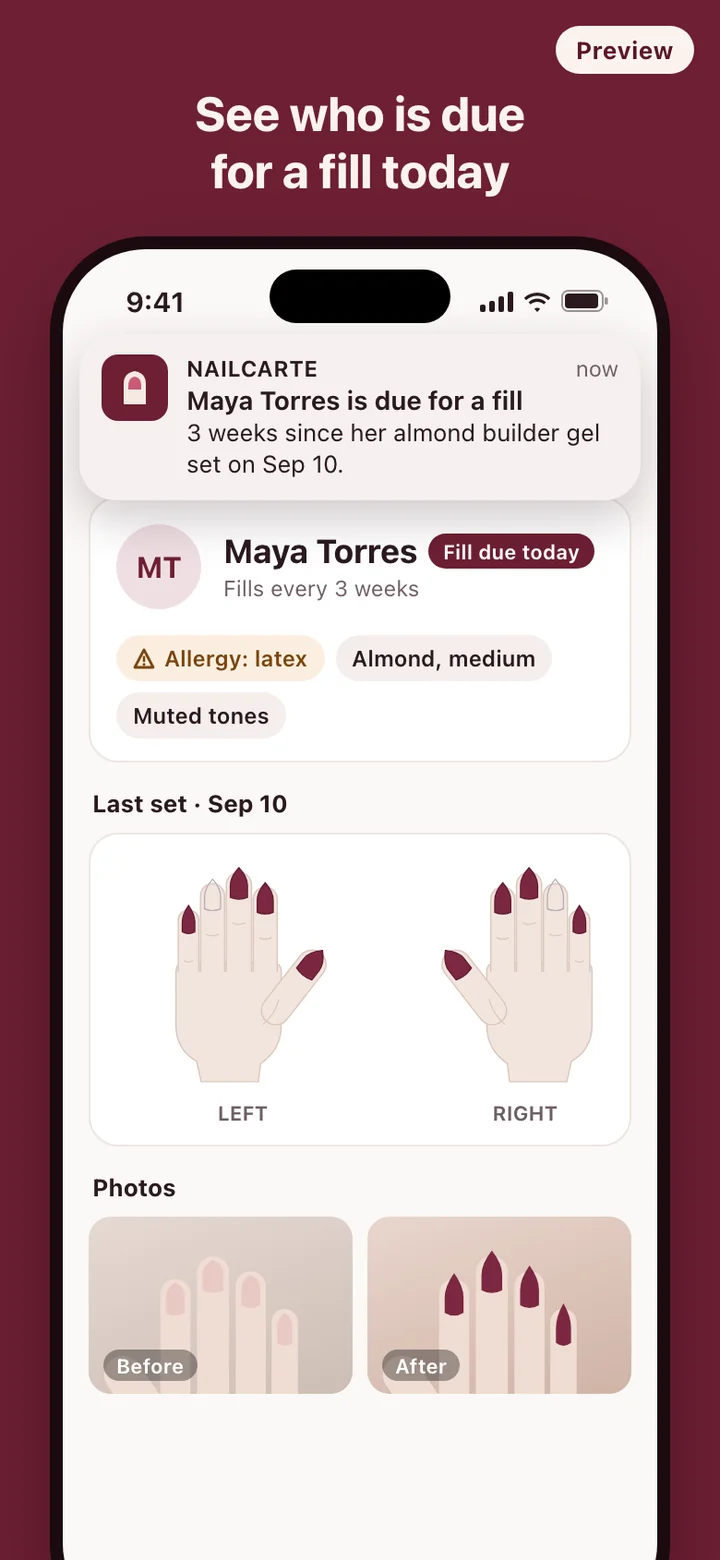
- In the morning, your phone reminds you which clients are due today, based on the next-fill date you set at their last visit.
- When the client sits down, open her card. The last hand chart, the before and after photos, her preferences, and the allergy note are all on it.
- Mark today's work on a new chart, nail by nail, and take the after photo.
- Set the next fill date and save. If she wants a copy of her record, export the card as a one-page PDF and send it the way you normally share files.
What NailCarte leaves out
It does not book appointments, take deposits, or text clients. Booking apps already do that, and many techs are happy with the one they use; NailCarte sits next to it and holds the part a calendar was never built for. There is no account to create and no cloud copy of your client photos. The records stay on the phone you made them on and leave it only when you export a PDF.
It also does not judge. NailCarte will not tell you whether a client's reaction is an allergy, which product is safe for her, or whether a nail is fit to work on. It keeps what you and the client tell it, in the order it happened.
NailCarte stores the consent form your client signs. It does not give legal or medical advice, and it cannot tell you whether a form meets the consent and record-keeping rules where you work, which differ by state and country. Ask your licensing board or a qualified professional what your records need to include, and send a client with a suspected reaction to a doctor.