Where the clipboard and the spreadsheet break
Many solo techs start the same way: readings scribbled on a clipboard that gets splashed, a spreadsheet filled in at night, and a photo texted to the owner when there is time. It works until the route grows. By the twelfth pool the numbers from the third are a guess, and the customer who asks what you put in their water on Tuesday gets an answer from memory.
Route software fixes the paperwork, but it is commonly billed per serviced pool every month, often with a monthly minimum, and it lives behind an account on someone else's server. PoolRound is sized for one person and one phone. It keeps the route, the readings and the report in the same place, and it does not need a signal in the backyard to do it.
One stop, start to finish
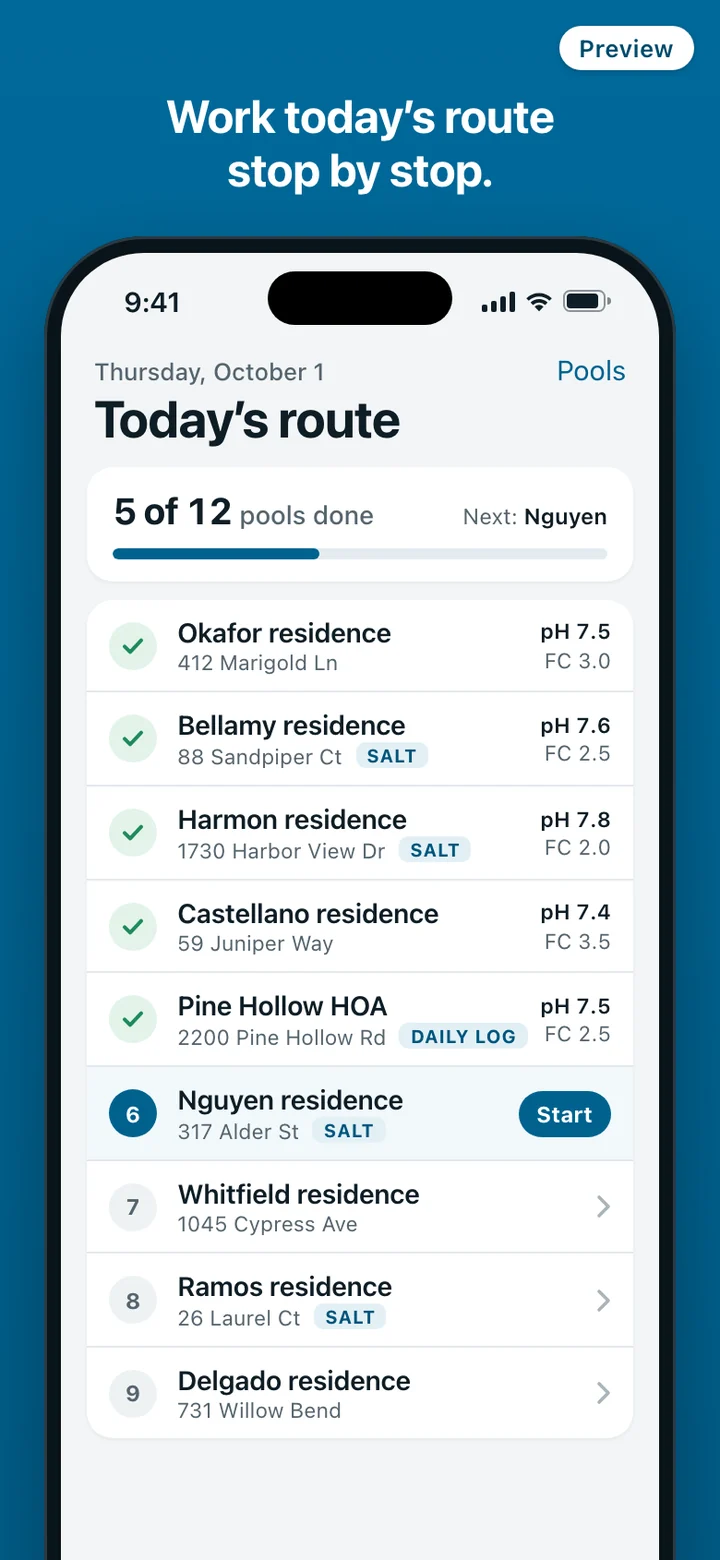
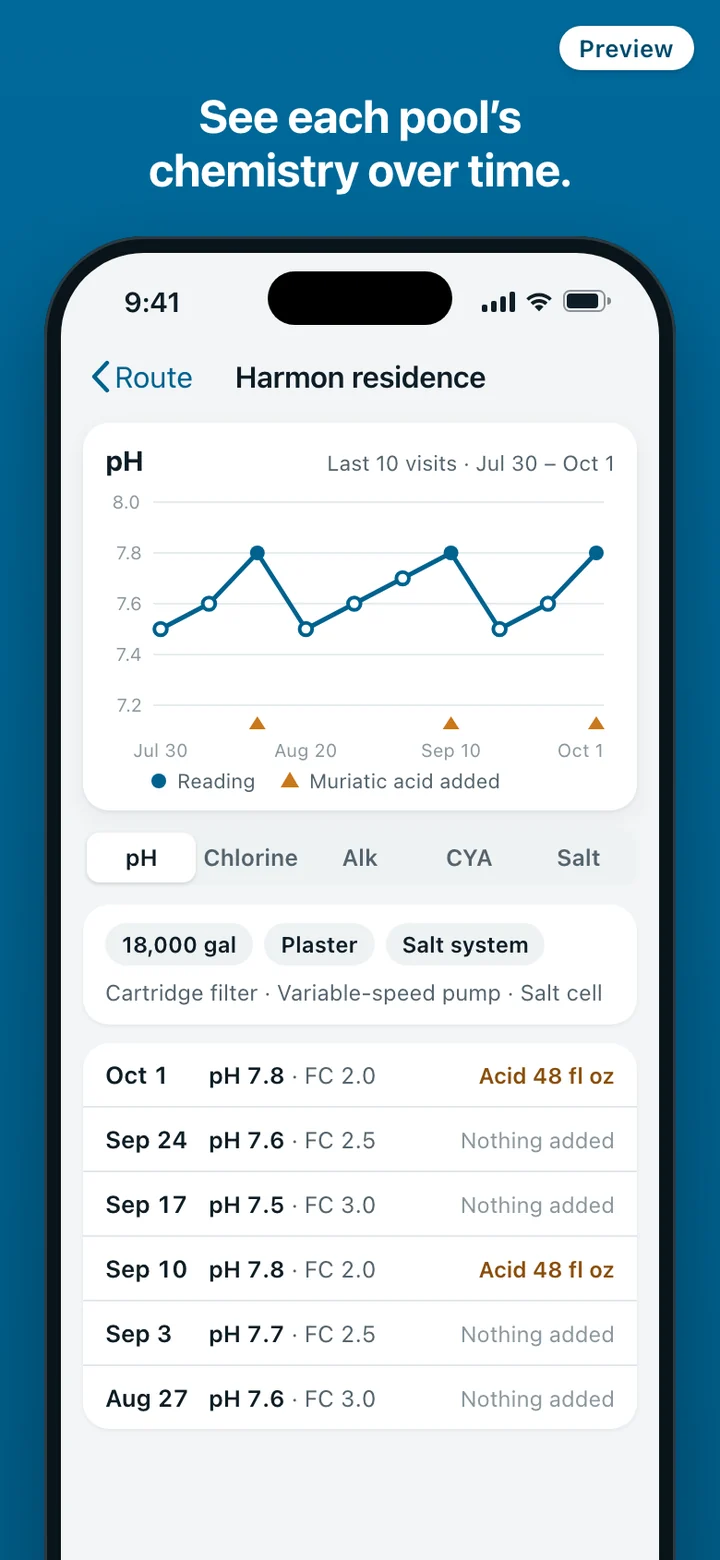
- Open the next pool on today's route. The pool card shows its gallons, surface and equipment, and the readings from your last visit.
- Test the water with your own kit and set each slider: free chlorine, pH, total alkalinity, CYA, and salt if it is a salt pool.
- Record what you added, for example muriatic acid and the amount in fluid ounces, then tick the filter and the skimmer and pump baskets.
- Take a photo of the finished pool and save the visit. The report is built on the phone, and the share sheet sends it by text or email.
The whole stop is a handful of taps between brushing the steps and closing the gate. Nothing has to be retyped at the end of the day, because the visit you saved is the record.
What the customer receives
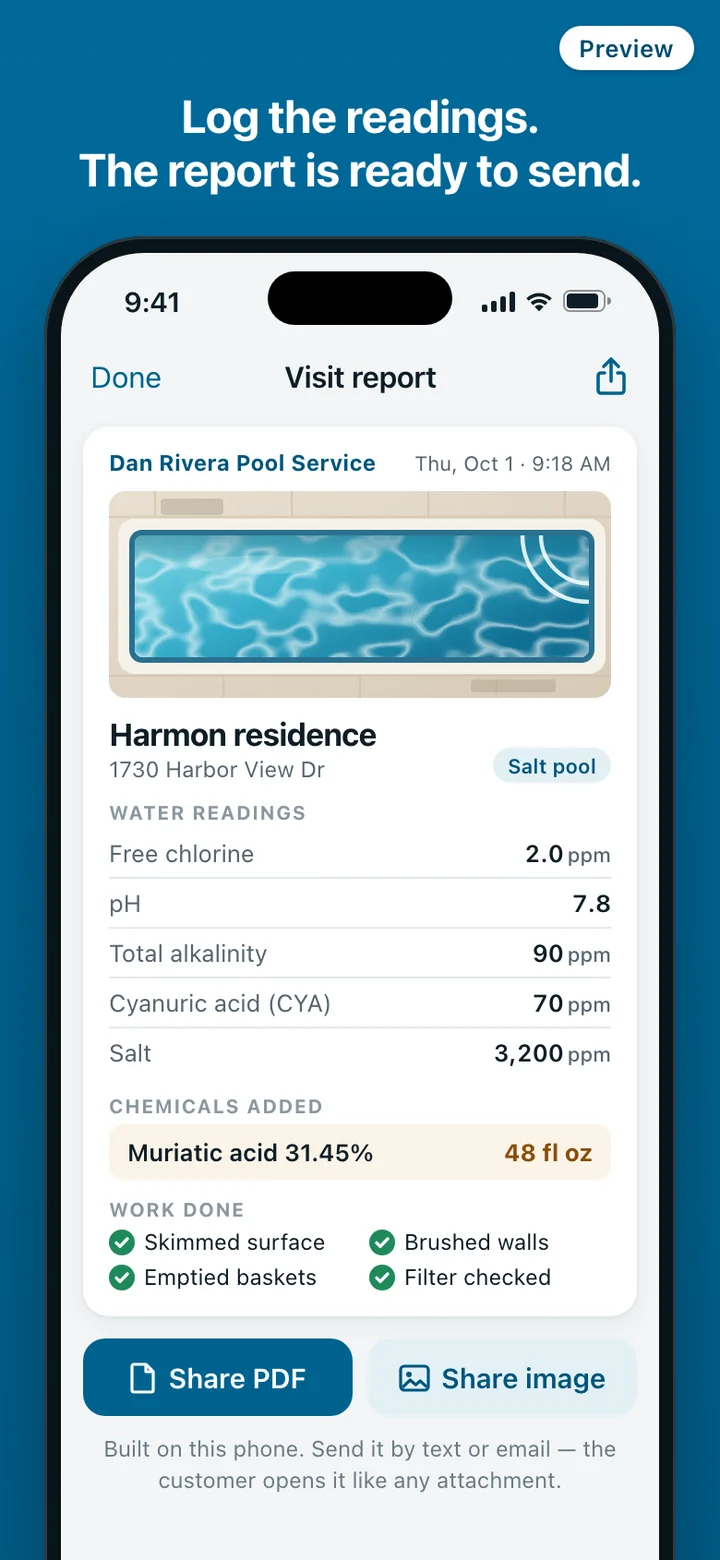
The report is a single page with your name at the top, the date and time of the visit, the address, the photo you took, each reading with its unit, the chemicals you added with amounts, and the work you ticked off. It goes out as a PDF or as an image, whichever reads better in the customer's messages.
Owners open it like any other attachment. There is no portal to log into and no app to install, which matters for the customer who only wants to know that the pool was serviced and what went into it. A report with a photo and the numbers answers the question before it is asked.
HOA and apartment pools
Commercial pools run on daily paperwork. Many state and county health codes expect the operator to test and write down disinfectant and pH every day and keep the sheets on site. PoolRound has a daily log mode for these pools: each day's readings go on one line, and the month can be exported as a PDF to print or file with the pool's records.
The requirements themselves differ from place to place, in what has to be tested, how often, and how long records are kept. PoolRound gives you a clean, dated record of what you entered. Whether that record satisfies your local code is a question for the pool's operator and the health department that inspects it.
What it deliberately leaves out
PoolRound is a route book and a report maker, not a dispatch board or a billing system. It records the chemicals you added; it does not tell you what to add. The product label, your training and your own test kit make that call, and the app keeps the receipt.
There is no account, no customer portal and no server holding your customers' addresses. The route, the pool cards and the visit history live on your phone, and the reports and logs you export are files you keep wherever you like.
PoolRound is a record-keeping tool. It does not calculate chemical doses, judge whether water is safe for swimming, or certify compliance with any state or local pool code. Always follow the chemical product label and the rules of your local health department.