A job that comes around every few years
The U.S. Environmental Protection Agency says household septic tanks are typically pumped every three to five years and inspected at least every three. That is long enough for the last date to end up on a receipt in a kitchen drawer, a magnet on the fridge from the last company, or in the memory of a previous owner. When the house changes hands, the history often goes with the old paperwork.
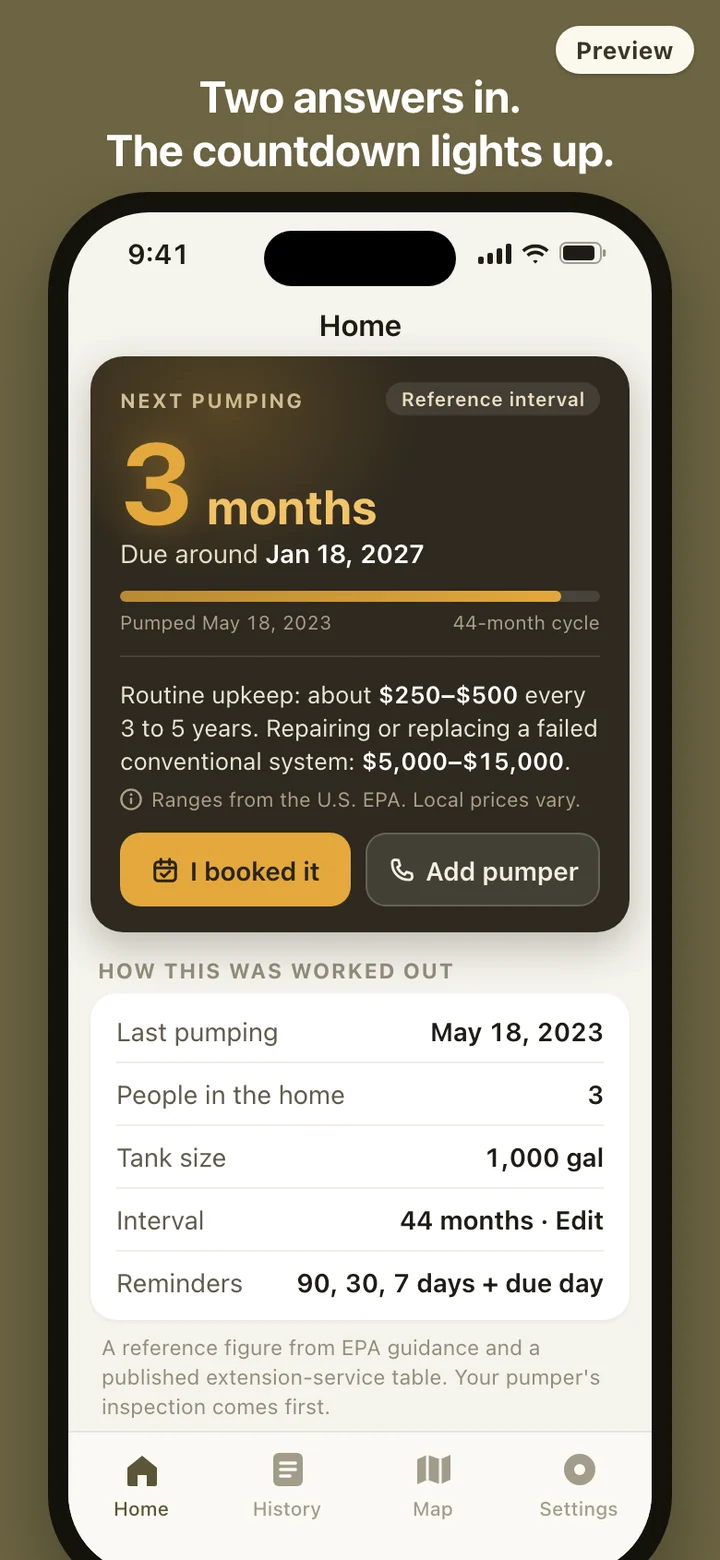
The cost of losing track is lopsided. EPA puts routine maintenance at $250 to $500 every three to five years and the repair or replacement of a malfunctioning conventional system at $5,000 to $15,000. SepticLog does not know what is inside your tank. It only keeps the date, the people and the paperwork in one place, so the next booking happens because the phone remembered, not because a drain backed up.
Where the suggested interval comes from
The interval on the countdown is labeled as a reference figure. It is drawn from published guidance only: EPA's three-to-five-year range and an extension-service table that adjusts for household size and tank size. Leave tank size blank and the household size alone sets it. A note under the card says the same thing every time: a professional's inspection comes first.
If your pumper measured the sludge and scum and told you to come back in two years, type that in. Your own interval replaces the suggestion everywhere, on the card and in every reminder, and the card shows that you set it. Tank size can be entered in gallons or liters, and costs show in your own currency.
Not sure when the tank was last pumped? Tap that you don't remember. Instead of guessing a date, the card suggests booking an inspection and offers to start counting from today, so you still get a reminder without pretending to know the history.
Reminders built to last years
A reminder that has to fire four years from now cannot be one alert set once and forgotten. SepticLog sends four: 90 days out, which is time to call around, then 30 days, 7 days and the due day. An optional yearly inspection reminder can be switched on as well. Every time you open the app it rebuilds the whole schedule from your records, so changing a date or logging a pumping never leaves an old alert behind.
Notifications are a nudge, not the record. If you turn them off, the home screen countdown is still correct whenever you look. Once the due date passes, you get one plain reminder and a button to book, with no streaks, badges or repeated warnings. Most months there is nothing to do, and the app expects to sit quietly until it is needed.
A record that outlasts your phone
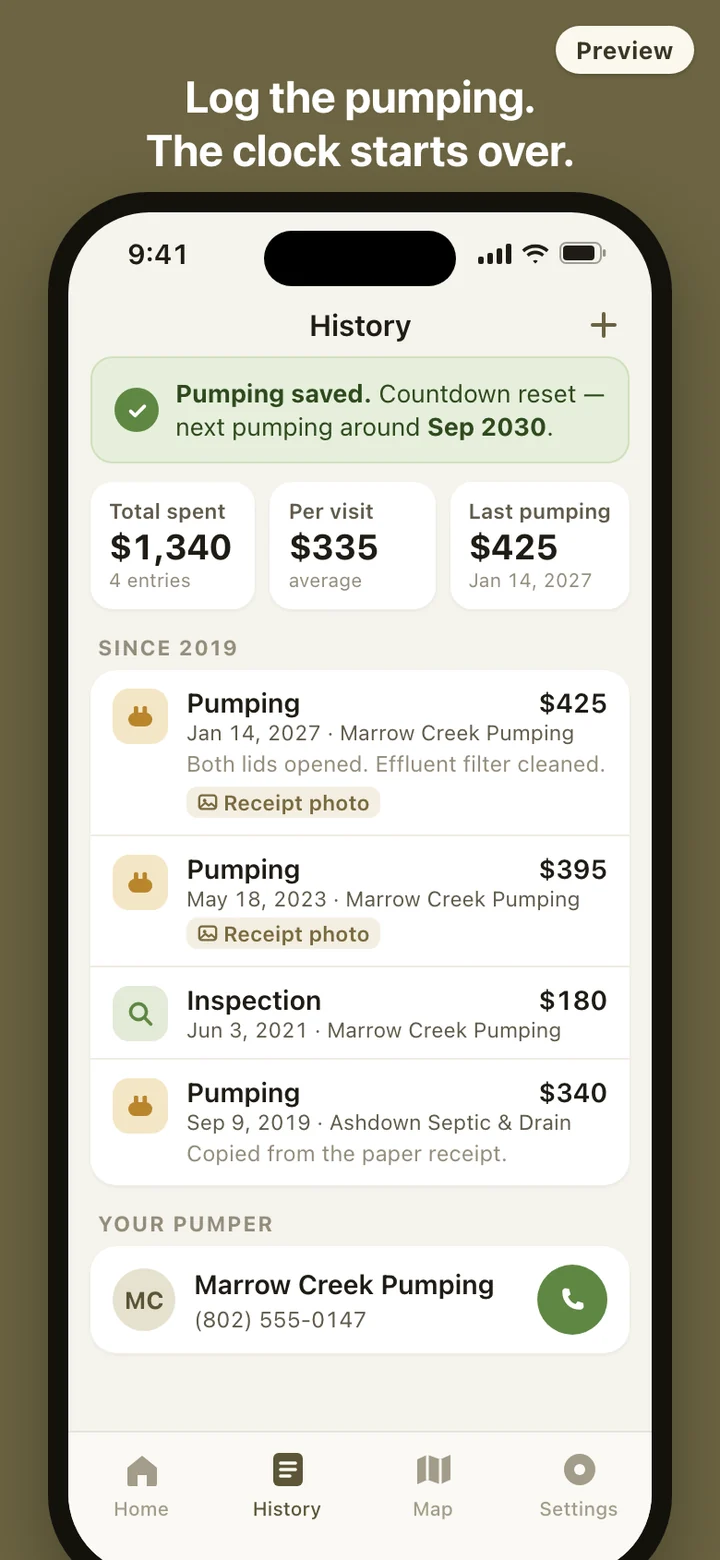
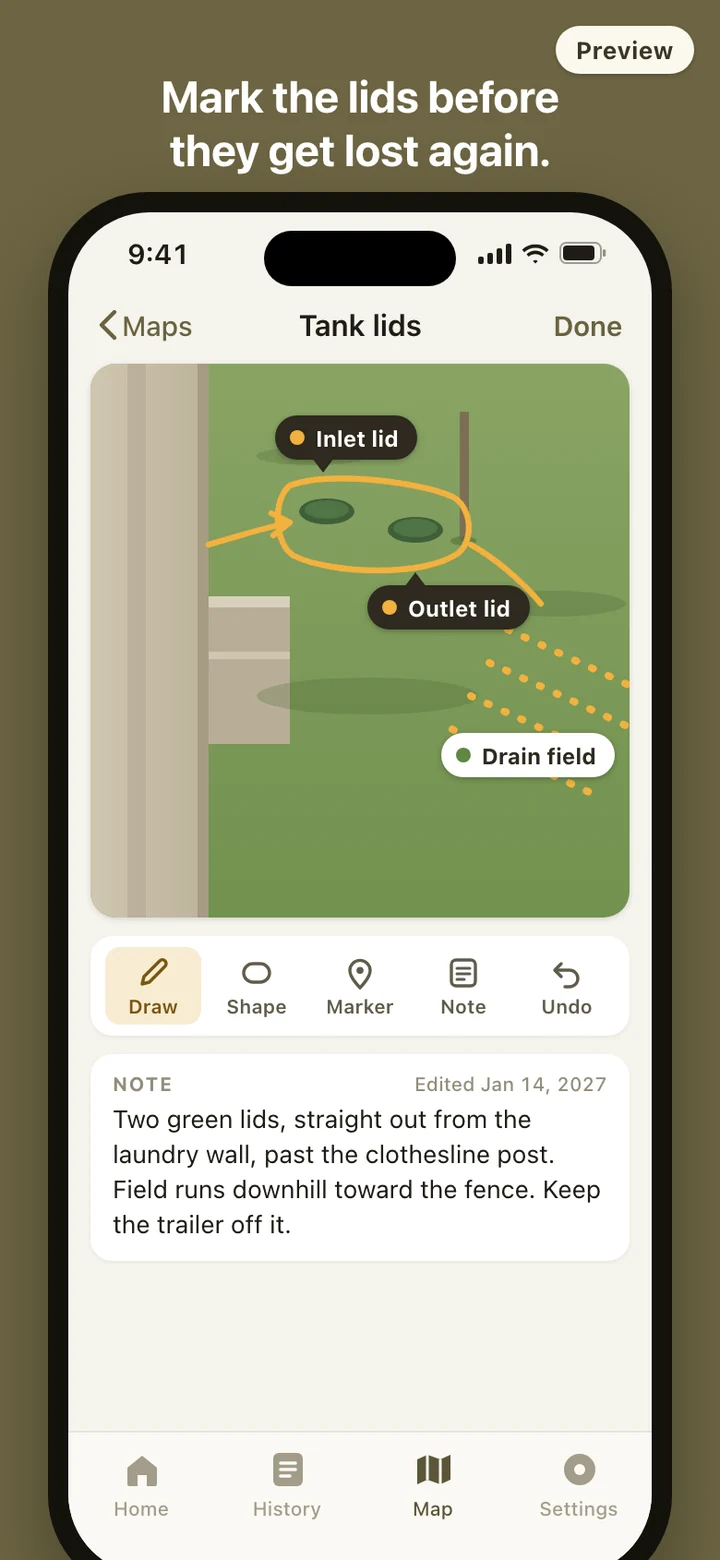
Three to five years is long enough to replace a phone, so the record has to move with you. Export a backup file through the share sheet, keep it wherever you like, and import it on the new phone to bring back your settings, history, pumper details and map sketches. Photos stay on the phone and are not inside the backup file; the app says so before you export.
Every entry can be edited or deleted, and one setting wipes everything at once: records, photos and scheduled reminders. There is no account and no server, and the app makes no network requests, which also means it works in a back yard with no signal. The call button hands the number to your phone's dialer.
What it deliberately leaves out
There are no tank sensors, alarms or monitoring devices to pair. The yard map has no GPS, no scale and no measuring tools; it asks for photo access only when you add a picture and never asks for your location. SepticLog does not grade your system, read inspection results for you, or explain local permit rules. EPA notes that it does not regulate single-family septic systems and that in most states local health departments issue the permits, so the rules where you live come from them.
SepticLog is a calendar and record book. It does not inspect your septic system or tell you whether it is working, and it is not affiliated with the U.S. EPA or any health department. Intervals and cost ranges are reference figures from published guidance; a septic professional's inspection and your local health or environmental department's rules come first.