The paperwork after the spray
Plenty of owner-operators still close a job the way they learned it: a carbonless ticket book on the dash, a pen, and the top copy torn off for the customer. It works until the copy is smudged, the registration number is missing because the label was on the far side of the jug, or a homeowner calls eighteen months later asking what was sprayed around the foundation.
Software for pest control companies exists, but most of it is built around an office: dispatch boards, routing, billing, and a login for every technician. A one-truck operator needs something smaller. One record per application, written on site, with a copy the customer can keep and a ledger that can still find it years later.
One ticket per application
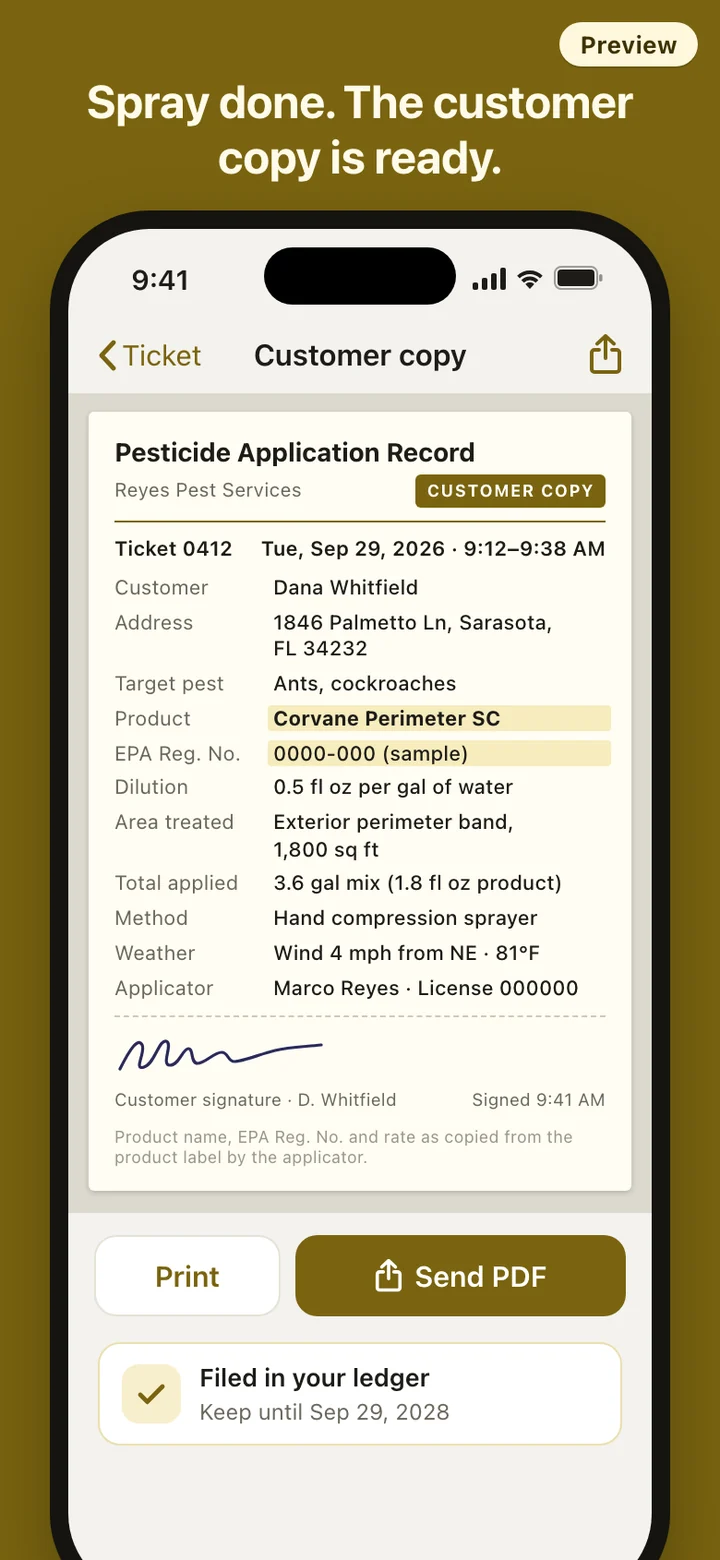
A ticket holds the fields that show up in pesticide record rules again and again: who the work was for and where, the date with start and end times, the target pest or site, the product name and EPA registration number, the total amount applied and the dilution, the size and location of the area treated, how it was applied, and the wind and temperature at the time. Your name and license number come from Settings, so they print on every copy without retyping.
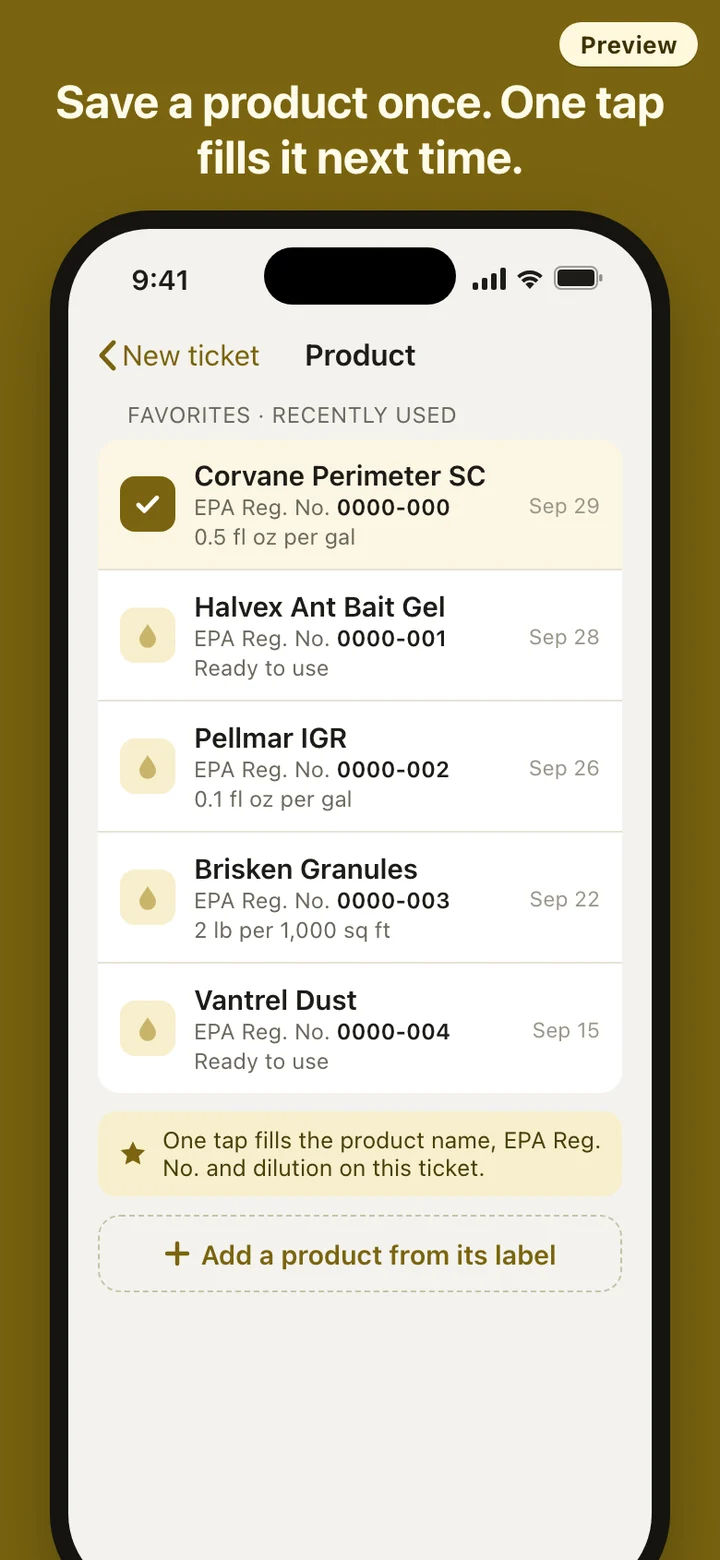
Typing on a phone with gloves on is slow, so the ticket leans on what you already entered. The product comes from favorites, your details come from Settings, and you type what is new today: whose property it is, how much went down and what the weather was doing. The customer copy is generated from the same ticket, so the two never disagree.
What the presets are based on
Florida. Florida Administrative Code rule 5E-9.032 asks licensed applicators to record each restricted-use application within two working days, keep the record for two years, and give the person the work was done for a copy within 30 days. Rule 5E-14.142 asks pest control licensees to keep pest control records, contracts included, for at least two years. The Florida preset uses those fields and a two-year keep-until date.
New South Wales. Under Part 4 of the Pesticides Regulation 2017, people who use pesticides for work in NSW, pest management technicians included, must make a record within 48 hours and keep it for three years, according to the NSW EPA. Licensed users also record the equipment, the start and finish times, and the owner or occupier. The NSW preset follows that list with a three-year keep-until date.
US federal minimum. USDA's restricted-use recordkeeping rule, 7 CFR Part 110, was removed effective July 11, 2025. At the federal level, EPA's certification rule, 40 CFR 171.303, still requires state certification plans to make commercial applicators keep restricted-use records for at least two years, with a minimum list of fields. This preset uses that list and two years. Your state may ask for more.
General. For anywhere else, the full ticket is used and you enter the number of years your regulator asks for.
A ledger for the phone call months later
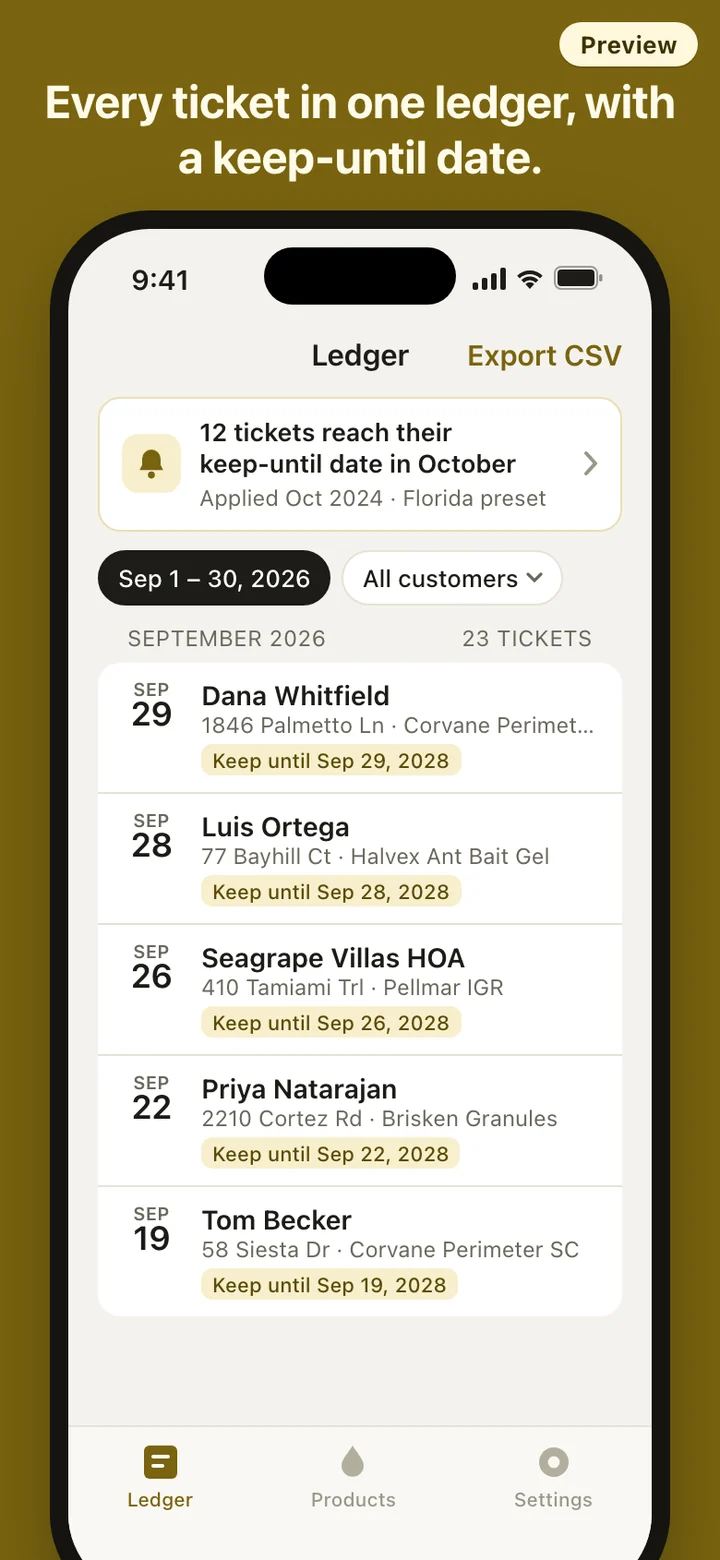
Tickets stack into one ledger, newest first. Filter by a date range when an inspector asks about last spring, or by customer when a homeowner wants every treatment on their property. Any ticket can be opened again and its PDF sent again. CSV export puts the whole ledger, or a filtered slice, into a spreadsheet for your bookkeeper, your own backup, or a move to a new phone.
Each ticket carries a keep-until date from your preset. When tickets reach it, the app tells you, so what happens to old records is a decision you make on purpose rather than something you discover after a phone is lost.
What SprayTicket leaves out
It does not schedule routes, dispatch crews, send invoices or take payments. It has no customer portal and no login. It carries no label database: product names, registration numbers and rates are what you type from the label, saved as favorites. And it does not check your work. It will not tell you whether a rate is allowed, whether a product is registered in your state, or whether the weather was fit to spray.
SprayTicket is a record-keeping tool. It does not interpret pesticide labels or regulations, and using it does not by itself make a record compliant. The label is the law: follow the directions on the product label, and check with your state or territory pesticide regulator for the records you must keep. Meeting your jurisdiction's rules remains your responsibility.